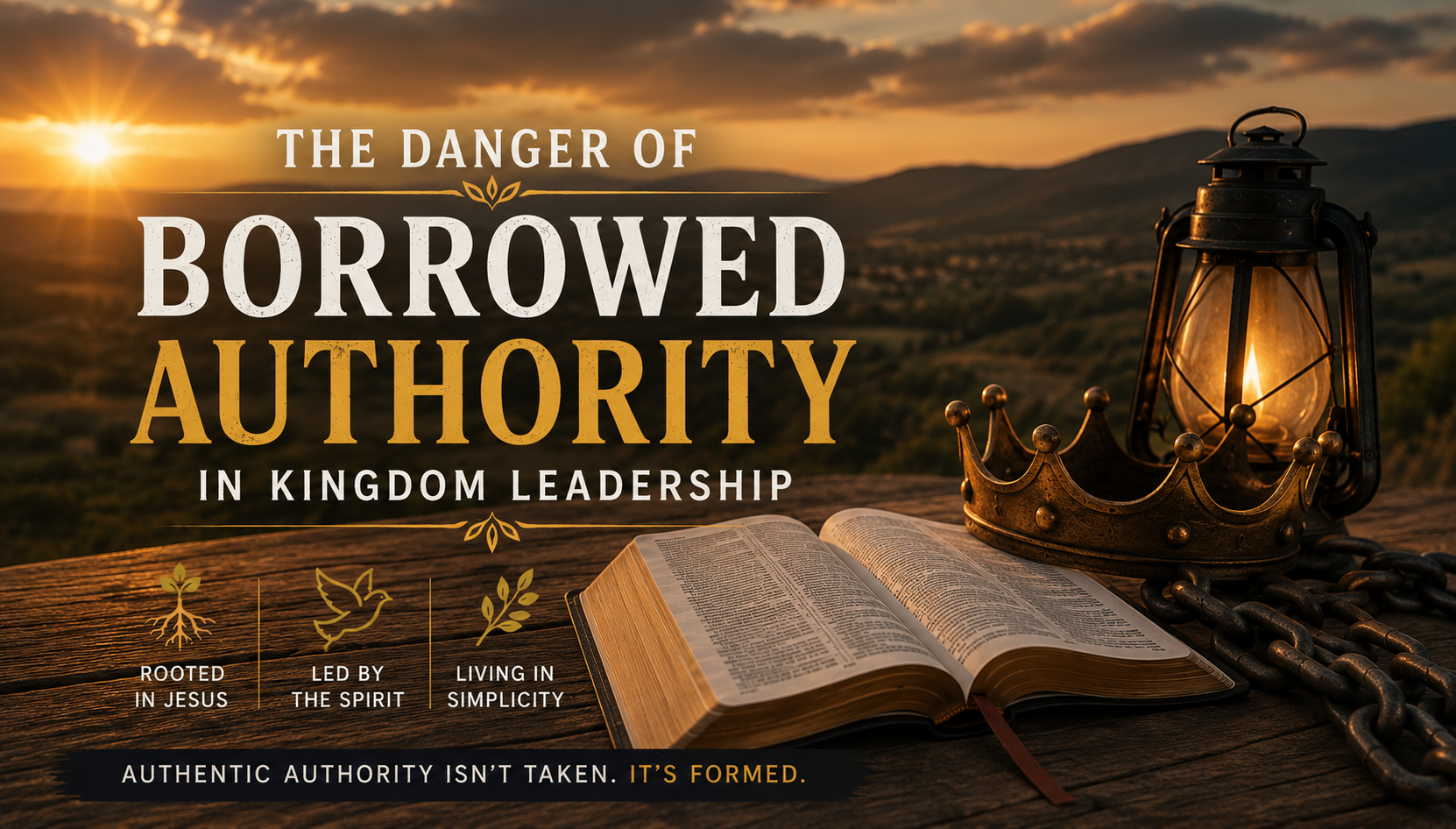
The Danger of Borrowed Authority in Kingdom Leadership
Leadership can grow faster than formation. Influence can expand before character has deepened. Language can become polished before conviction has become rooted.
Acts 19 gives us one of the clearest warnings in Scripture about the danger of borrowed authority.
“Jesus I know, and Paul I recognize, but who are you?”
— Acts 19:15
The sons of Sceva had religious language. They had proximity to spiritual activity. They had seen authority operate through Paul. But they tried to use what had not been formed in them. For leaders, disciple-makers, pastors, church planters, and marketplace ministers, this passage asks a searching question: Are we leading from formation, or are we operating on borrowed weight?
Key Takeaways
- Kingdom authority cannot be borrowed from another person’s relationship with God.
- Influence without formation eventually becomes fragile.
- Leaders must resist the temptation to imitate outcomes without embracing hidden obedience.
- Authentic spiritual authority flows from surrender, humility, and abiding in Christ.
- Exposure can become mercy when it leads leaders back to repentance and realignment.
1. God Was the Source of Paul’s Authority
“And God was doing extraordinary miracles by the hands of Paul…”
— Acts 19:11
The text is careful. It does not say Paul was doing extraordinary miracles by his own strength. It says God was doing them through Paul.
That distinction matters for leaders. Paul did not manufacture authority. He stewarded surrender. The power did not originate in his personality, gifting, strategy, or reputation. It came from God.
Kingdom leadership begins to drift when leaders become more focused on carrying influence than carrying presence. The goal is not to appear powerful. The goal is to remain yielded.
2. Borrowed Language Cannot Replace Personal Conviction
The sons of Sceva attempted to speak in the name of “the Jesus whom Paul proclaims.” They were not speaking from personal surrender. They were borrowing Paul’s language.
“I adjure you by the Jesus whom Paul proclaims.”
— Acts 19:13
Leaders can do the same thing. We can borrow language about discipleship, multiplication, mission, prayer, revival, culture, and spiritual authority without allowing those realities to be formed deeply in us.
Borrowed language may sound convincing for a while, but pressure eventually reveals whether conviction is real.
Healthy leaders do not simply repeat the language of others. They allow Scripture, obedience, suffering, prayer, and community to form something true within them.
Leadership formation line: Borrowed authority may create temporary momentum, but only formed authority can carry lasting Kingdom weight.
3. The Spiritual Realm Recognizes Authenticity
The evil spirit’s response was direct and exposing:
“Jesus I know, and Paul I recognize, but who are you?”
— Acts 19:15
Jesus was known because He is Lord. Paul was recognized because his life was genuinely submitted to Jesus. The sons of Sceva were exposed because they attempted to operate in authority without being under authority.
This is a leadership issue. Titles may give access. Platforms may create visibility. Branding may build recognition. But none of those things create spiritual weight.
Real authority is recognized through humility, integrity, consistency, obedience, and the presence of Christ in a leader’s life.
4. Influence Without Formation Eventually Gets Exposed
The sons of Sceva were not merely unsuccessful. They were exposed publicly. What they attempted to operate in outwardly did not exist inwardly.
For leaders, exposure can feel terrifying. But in the mercy of God, exposure can become an invitation. It can reveal what needs healing, correction, repentance, or rebuilding before greater damage is done.
The danger is not weakness. The danger is pretending we are stronger, healthier, or more surrendered than we actually are.
Kingdom leaders must become people who welcome the forming work of God in hidden places before they ask Him to entrust them with greater public influence.
5. Healthy Leadership Flows From Abiding
Acts 19 ends with a powerful statement:
“So the word of the Lord continued to increase and prevail mightily.”
— Acts 19:20
The Word prevailed. Not personality. Not performance. Not imitation. Not religious technique. The Word of the Lord prevailed.
This is the aim of Kingdom leadership. We are not building ministries around ourselves. We are making room for the Word of God to increase, take root, bear fruit, and prevail in people, households, cities, and nations.
Practical Questions for Leaders
- Am I leading from intimacy with Jesus or from pressure to perform?
- Where have I borrowed language that has not yet become conviction?
- What part of my leadership looks stronger publicly than it is privately?
- Am I more concerned with being recognized by people or being known by God?
- Where is God inviting me into deeper formation before greater influence?
Building Leadership That Can Carry Weight
At Simplicity Church Network, we believe leaders are formed through presence, obedience, relationships, and Spirit-led discernment—not pressure, performance, or institutional striving.
If you are navigating leadership, discipleship, ministry health, or church planting, these resources may help you continue the journey:
Action Steps for Kingdom Leaders
- Spend time this week asking God where your leadership needs deeper formation.
- Identify one phrase, model, or strategy you have borrowed and ask whether it has become real conviction.
- Invite a trusted leader to speak honestly into your character, pace, and emotional health.
- Create space for prayer before making your next major leadership decision.
- Choose one hidden act of obedience that no one else will see.
Key Takeaways: The Danger of Borrowed Authority in Kingdom Leadership
The sons of Sceva wanted authority without intimacy. They wanted the results of spiritual power without the formation of surrendered life.
Paul carried authority because he belonged to Jesus and lived under His authority.
The future of healthy Kingdom leadership will not be built on borrowed conviction, polished language, or platform-driven influence. It will be built by men and women who are being formed in hidden places, rooted in Christ, led by the Spirit, and willing to let the Word of the Lord prevail above their own name.
FAQs
What is borrowed authority in Kingdom leadership?
Borrowed authority is when a leader attempts to operate from another person’s language, influence, gifting, or spiritual credibility without personal formation, surrender, and obedience to Jesus.
What does Acts 19 teach leaders?
Acts 19 teaches leaders that spiritual authority cannot be imitated or manufactured. It flows from genuine relationship with Jesus and life under His authority.
Why is formation important before influence?
Formation matters because influence places weight on a leader’s character. Without deep roots in Christ, public influence can become fragile, performative, or harmful.
How can leaders avoid borrowed authority?
Leaders avoid borrowed authority by cultivating prayer, humility, accountability, Scripture-rooted conviction, emotional honesty, and daily obedience to Jesus.