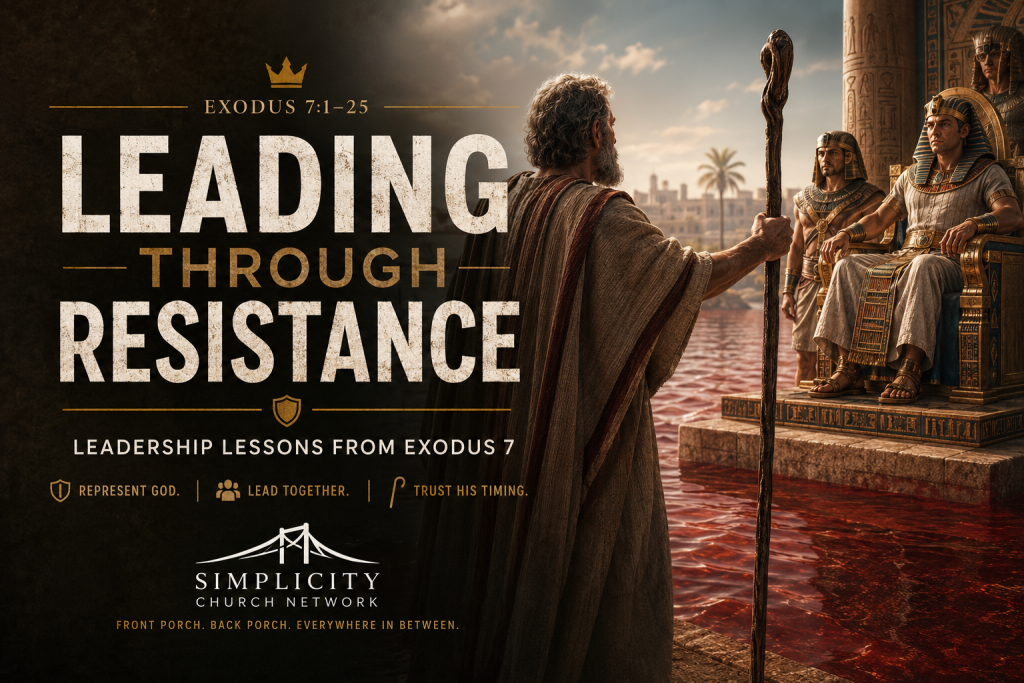
Leading Through Resistance: Leadership Lessons from Exodus 7
Exodus 7 shows leaders how to remain faithful when obedience produces resistance, opposition imitates authority, and outcomes remain outside their control.
Exodus 7 shows leaders how to remain faithful when obedience produces resistance, opposition imitates authority, and outcomes remain outside their control.
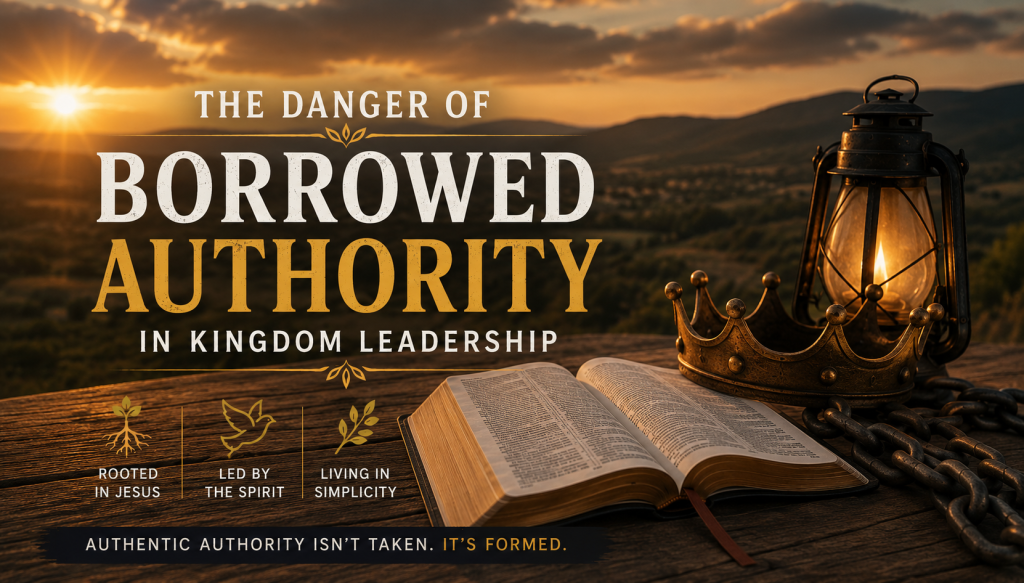
Acts 19 exposes the danger of borrowed authority and performance-driven leadership. Discover why authentic Kingdom influence flows from formation, surrender, and abiding in Christ rather than platform, branding, or imitation.
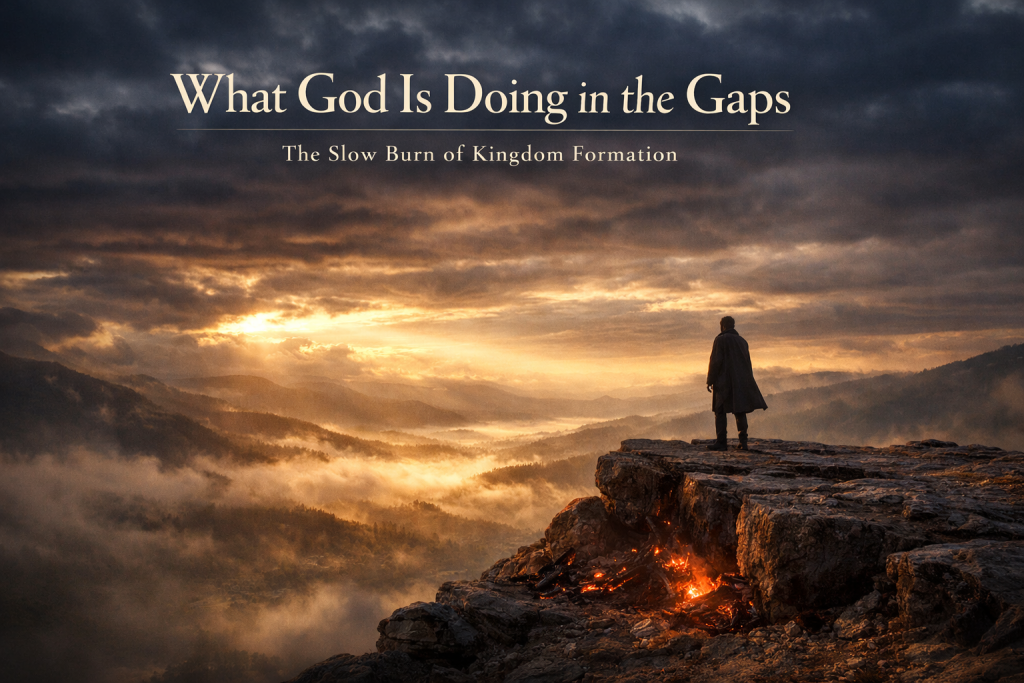
The Slow Burn of Kingdom Formation I. Introduction: The Fear of the Gap The invitations slow. The momentum stalls. The door that seemed certain closes without explanation. Your influence feels smaller.Your voice feels quieter.Your progress feels delayed. And the whisper rises: Did I miss God? Leaders are addicted to movement. We measure fruit by expansion.We measure obedience by visibility.We measure calling by acceleration. But here is the truth most leaders resist: The gap is not where God pauses your calling — it is where He purifies it. Delay is not divine hesitation.It is divine refinement. What feels like loss is often reduction for strength.What feels like silence is often surgical precision. If you are in a gap, you are not abandoned. You are being rebuilt. Key Takeaways Hiddenness is not punishment — it is preparation. God deepens before He displays. Reduction precedes authority. Waiting exposes false dependencies. Fast growth produces fragile leaders. Slow burn produces immovable ones. If God has slowed you down, He is increasing your weight. II. The Lie of Immediate Momentum The modern church worships speed. We assume that if God is in it, it will expand quickly. That is not Kingdom thinking. Jesus was hidden for 30 years. David was hunted before he was crowned. Joseph was imprisoned before he governed nations. God builds leaders the way He builds foundations — underground first. Silence does not mean stagnation. Silence means excavation. Waiting is not weakness. Waiting is warfare against impatience. If you cannot endure obscurity, you cannot steward influence. III. The Pattern You Cannot Escape Every Kingdom assignment follows a pattern: Promise Hiddenness Testing Reduction Release You do not skip hiddenness. You do not bypass testing. You do not negotiate reduction. The leader who tries to outrun this process collapses under the weight of what they prayed for. Hiddenness is not interruption. It is initiation. IV. Elijah: Detox Before Fire Elijah confronted kings. Then God sent him to a brook. Alone.Dependent.Reduced. The brook dried up. That was not failure. That was detox. God was stripping Elijah of visible strength so that heaven could trust him with visible power. Then came Carmel. Fire from heaven did not come from charisma. It came from hidden dependence. And when Elijah collapsed in the cave? God did not scold him. God recalibrated him. If you are in a cave, God is not punishing you. He is purifying your identity. V. Jeremiah: Obedience Without Applause Jeremiah preached. They ignored him. He warned. They resisted. He wept. Nothing changed. Would you stay if revival never came? Would you obey if fruit never surfaced? Jeremiah’s success was not measured in crowds. It was measured in faithfulness. The gap does not guarantee applause. It guarantees exposure of your motives. VI. Discern the Gap Not all slow seasons are equal. The Consequence Gap God is correcting you.Conviction is sharp.Exposure is mercy. The Formation Gap God is strengthening you.Intimacy increases.Clarity deepens. The Transition Gap God is repositioning you.Old grace lifts.New direction is forming. Discernment matters. But in all three, one thing is certain: God is not inactive. VII. What God Is Actually Doing He is purifying your motives. He is breaking your addiction to validation. He is strengthening internal structure. He is removing the need to be seen. He is increasing your spiritual weight. Authority in the Kingdom is not granted by position. It is forged in surrender. The gap reveals what you were leaning on. And God will remove whatever competes with Him. VIII. The Slow Burn vs. The Flash Fire Flash fire: Rapid growth Shallow roots Loud influence Fragile leaders Slow burn: Deep roots Quiet strength Durable authority Leaders who cannot be shaken The world celebrates flash. Heaven builds slow burn. If God has slowed you down, He is protecting you from premature exposure. IX. How to Lead in the Gap Do not manufacture momentum. Do not scramble for relevance. Do not chase platforms. Abide. Listen. Obey the small things. Write down what God says. Refuse to move until He moves you. Isolation will distort you — stay connected to trusted voices. And above all, surrender fully. Half-surrender prolongs formation. Full surrender stabilizes it. Leadership Reflection Ask the Lord: What ambition are You removing? What dependency are You exposing? What identity are You dismantling? What strength are You building? Sit until the answer unsettles you. That is where formation begins. X. The Promise of the Slow Burn You are not behind. You are under construction. God is not withholding promotion. He is building capacity. He is not silencing you. He is sharpening you. He is not shrinking your influence. He is strengthening your core. The gap is not empty. It is holy ground. Hidden seasons produce leaders who cannot be manipulated, intimidated, or destroyed. The fire that lasts is rarely lit quickly. But when it burns, it does not go out. FAQs How long will this gap last? As long as it takes for the internal structure to match the external assignment. Can I accelerate the process? Only through surrender. Resistance prolongs it. Obedience stabilizes it. How do I know if this is formation and not failure? Failure drives you from God. Formation drives you into Him. Should I make major moves during this season? Not unless the Lord speaks clearly. Gaps are for rooting, not scrambling. Why does this feel like loss? Because something is dying. And what dies in you makes room for what must live through you. What is the greatest danger in the gap? Premature movement. Grasping for visibility. Forcing what God is still forming.

The Apostolic Assignment No One Wants There are moments in the apostolic journey when God sends you into a region that doesn’t seem ready—or even willing—to receive you. You arrive with fire in your bones and a Word from the Lord, only to be met with spiritual resistance, cultural suspicion, or outright rejection. It can leave you wondering, “Did I hear God wrong?” But this isn’t a mistake. It’s the pattern. Jesus was driven by the Spirit into the wilderness before He ever preached His first sermon (Mark 1:12–13). Paul was sent to cities that beat him, stoned him, or tried to silence him. Jeremiah preached to a people who refused to listen. Elijah ministered in the shadow of demonic systems. Yet from these desolate places came revival, transformation, and the establishment of God’s purposes. Apostolic fruit often begins in hostile soil. Key Takeaways Hard assignments are holy assignments.God often sends pioneers into spiritually resistant regions as part of His redemptive plan, not as punishment. Desolate places are preparation grounds.Just like Jesus, Paul, and the prophets, God uses wilderness seasons to form character, deepen dependence, and sharpen discernment. Resistance is not rejection by God.Hostility from people or culture doesn’t mean you missed your calling—it may confirm you’re exactly where God wants you. Spiritual authority is forged in hardship.True influence is not built on popularity or platform, but through tested obedience and suffering. You’re sent, not stuck.God doesn’t waste your obedience. Even when fruit is delayed, the soil is being prepared for breakthrough. Stay rooted in Word, prayer, and relationship.These are your lifelines in difficult ground. Don’t measure impact by speed, but by faithfulness. Biblical Foundations for Hostile Assignments Jesus in the WildernessBefore Jesus multiplied bread or healed the sick, the Spirit drove Him into the desert. The wilderness was His training ground, a season of identity testing and spiritual warfare. It was where He proved the Word, not to others, but within Himself. Paul in Hostile CitiesFrom Antioch to Lystra, Paul faced persecution. Yet each rejection became a seedbed for new churches and leaders. Opposition became opportunity. Old Testament EchoesJeremiah’s message was ignored. Elijah’s ministry was resisted. But both laid the groundwork for renewal. God’s pattern hasn’t changed—He still sends His servants into difficult territory to prepare the way. Why God Sends You to Places That Don’t Want You 1. To Break Ground for Future Fruit“Unless a grain of wheat falls into the earth and dies, it remains alone” (John 12:24). Every movement begins with a burial. God sends pioneers to sow seeds others will harvest. You may not see the fruit, but your obedience cultivates the soil. 2. To Expose and Crush Self-RelianceHard places expose our dependence on human affirmation. The loneliness, misunderstanding, and resistance strip away pride and demand fresh trust in the Spirit. As Paul said, “This happened that we might not rely on ourselves but on God” (2 Corinthians 1:9). 3. To Establish Spiritual Authority Through SufferingSpiritual authority isn’t conferred by title—it’s forged in hardship. True authority comes when you’ve endured the fire and stayed faithful. God carves apostolic leaders through rejection, misunderstanding, and waiting. Three Truths to Hold in the Desolate Place You’re not there for comfort—you’re there for conquest.Every place the sole of your foot treads, God has given you (Joshua 1:3). You are not there to blend in, but to break through. Kingdom ground is taken, not granted. You’re not abandoned—you’re being trusted with territory.Isaiah 41:10 reminds us that God’s presence doesn’t vanish in difficulty. The wilderness is evidence that Heaven trusts you to carry the assignment. You’re not cursed—you’re being carved into a vessel of breakthrough.You are being shaped, not sidelined. The refining is proof that God intends to pour something powerful through you. Markers of a God-Sent Hard Place How can you tell you’re truly sent into a “desolate” assignment and not just wandering? Look for these indicators: Resistance from both the spiritual and natural atmosphere. Delayed visible fruit despite faithful obedience. Inner stripping—loss, loneliness, and a call to deeper dependence. Recurrent confirmations from the Lord to stay. Deepening discernment and intercession. These aren’t signs of failure—they’re signs of formation. What to Do While You Wait and Wrestle Stay Rooted in the Word.When the soil is hard, your roots must go deeper. Let the Word anchor your identity and renew your mind daily. Develop Rhythms of Intercession and Listening.Don’t just “work the ground”—pray the ground. Ask the Spirit to reveal what’s resisting His reign in that place. Declare the promises of God over the territory. Build Slowly, Intentionally, and Relationally.Movements start with relationships, not rallies. Look for the person of peace (Luke 10:6). Invest in hearts before you plant structures. You’re Being Sent, Not Stuck Desolate places are not delays—they are divine deployments. You haven’t been forgotten; you’ve been trusted. God sends His most faithful servants into the hardest fields because He knows they’ll endure until breakthrough comes. Stay faithful. Stay rooted. The soil may be hard now, but the harvest belongs to the obedient. “The wilderness is never wasted when it’s walked in obedience.” Frequently Asked Questions (FAQs) Q1: How do I know if God really sent me to this hard place—or if I made a mistake?A: Look for confirmation through Scripture, prayer, and prophetic clarity. God often confirms His assignments through deep conviction, alignment with His Word, and recurring peace even amid resistance. If the calling was birthed in prayer, confirmed by mature voices, and remains persistent despite obstacles, you are likely in divine placement—not personal detour. Q2: Why would God send me somewhere that rejects me?A: Because He’s forming something through you—either in the land, the people, or in your own heart. Hostility is often a sign that you’re confronting entrenched spiritual resistance. It’s not about comfort; it’s about conquest (Joshua 1:3). God entrusts hard ground to those He can trust to be faithful in it. Q3: What should I do when I feel completely alone in this assignment?A: Lean into the presence of God. Create daily