Simplicity Church Network

biblical leadership

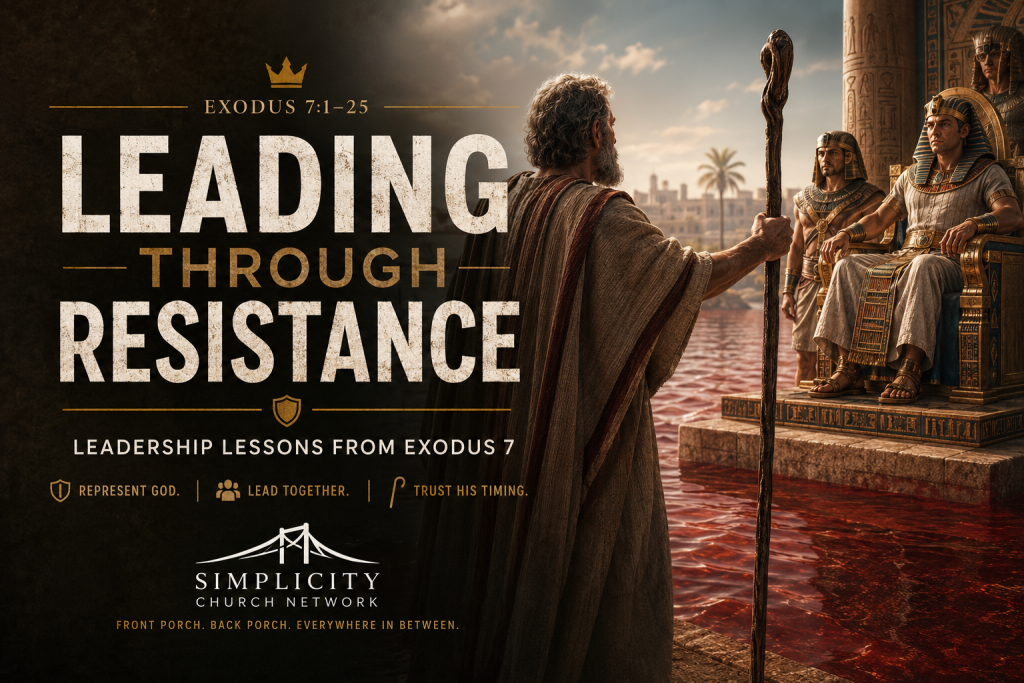
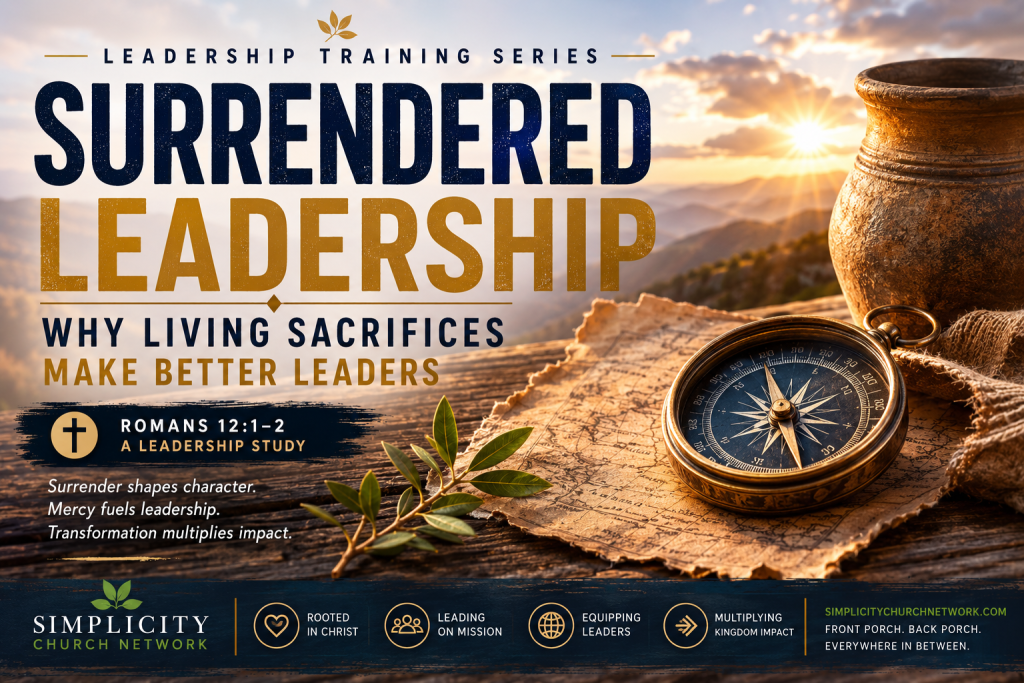
Surrendered Leadership leadership training graphic featuring a compass, journal, mountain sunrise, and Romans 12:1–2, illustrating how surrender shapes Christian leaders and Kingdom influence.
Leadership & Soul Care

Surrendered Leadership: Why Living Sacrifices Make Better Leaders

What if the greatest leadership breakthrough isn’t a new strategy, system, or skill—but deeper surrender? In this leadership study of Romans 12:1–2, discover why healthy leadership begins with God’s mercy, how surrender shapes character, why transformation starts in the mind, and how trust becomes the foundation of lasting influence. Learn practical principles for leading with humility, resilience, and Kingdom impact while developing the kind of leadership that multiplies rather than merely manages.

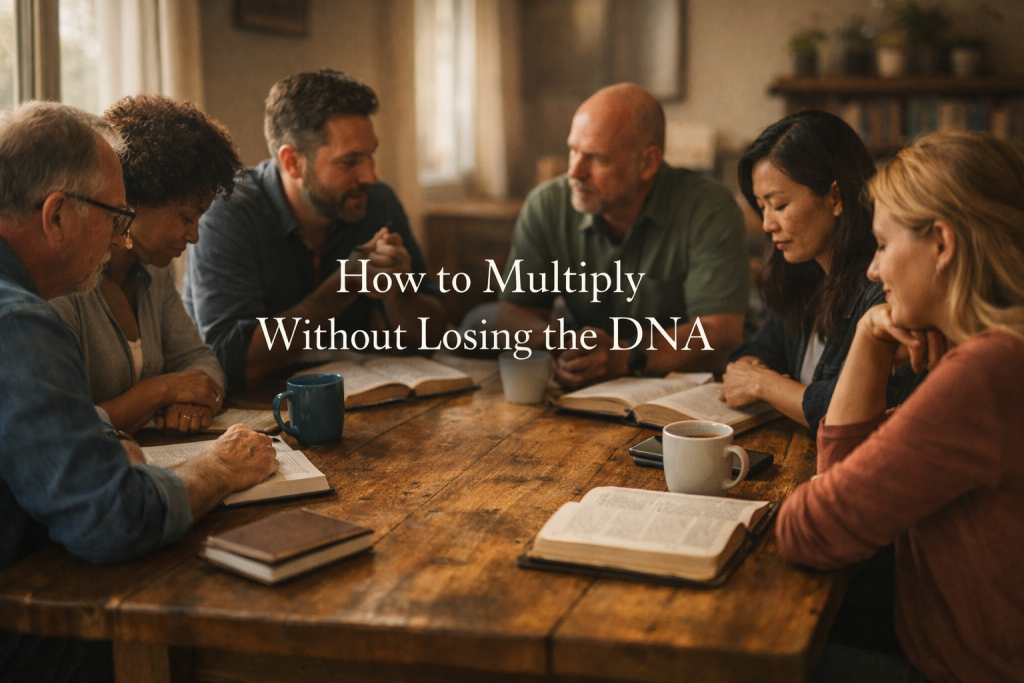
A warm, cinematic portrait of a diverse group of six adults gathered around a rustic wooden table in a softly lit room, engaged in Bible study and conversation. Open Bibles, notebooks, and coffee mugs rest on the table as natural window light casts gentle shadows across the scene. The overlaid title reads, “How to Multiply Without Losing the DNA.”
Discipleship & Multiplication

How to Multiply Without Losing Your DNA

How to Multiply Without Losing the DNA Multiplication is a gift. When disciples begin discipling others, when relational communities form organically, when renewal quietly spreads across environments — homes, workplaces, congregations, networks — something sacred is happening. Life is expanding. Faith is taking root in new soil. The Spirit is at work. But growth, if we are not attentive, can also expose what we have not yet examined. Movements rarely drift because of opposition. More often, they drift because of momentum. As influence widens, complexity increases. As complexity increases, pressure follows. And pressure has a way of revealing whether our roots run deep enough to sustain what is emerging. It is possible to expand and yet slowly lose the very essence that made the work alive. What began centered on Jesus can gradually become centered on outcomes. What began grounded in Scripture can become shaped by personality. What began prayerful can become strategic first and spiritual second. The external form may remain intact, but the interior life begins to thin. For those entrusted with leadership, the question is not merely how to multiply. It is how to steward multiplication without compromising the DNA that defines us. That is sacred work. Key Takeaways Multiplication reveals the depth of our formation. DNA is spiritual essence, not structural format. We reproduce what we embody, not merely what we teach. Expansion must never outrun spiritual depth. What we celebrate quietly shapes our culture. Leaders are to be recognized by fruit, not created by urgency. Alignment is preserved through shared submission to Jesus and Scripture. Multiplication is fruit of faithfulness, not the mission itself. Expression Changes. Essence Cannot. Across the New Testament, the people of God gathered in varied ways — in homes, in temple courts, in marketplaces, by riversides, in rented halls. The structure adapted to context. The confession did not. The apostles did not defend a model. They guarded the gospel. For us, the same distinction must remain clear. Relational expressions of community may take many forms. Some are intimate gatherings around a table. Some form in business environments. Some bring renewal within established congregations. Some emerge through networks of disciple-makers across regions. The container may differ. But the center must remain fixed. Spiritual DNA is not about format. It is about what sits at the heart: Jesus as Lord. Scripture as final authority. The Spirit actively leading. Obedience flowing from encounter. Love shaping community life. Leaders formed in humility. Belonging that creates space for transformation. If these remain intact, diversity of expression strengthens the work. If these shift, even the most faithful-looking structure cannot preserve what matters most. The church has always been called to guard the treasure entrusted to it. That guarding is not defensive — it is faithful. The Pattern of Drift in Scripture Drift is not new. It is visible within the pages of the New Testament itself. The churches in Galatia began in the Spirit but were gradually drawn toward performance. Paul’s question still echoes: “Having begun by the Spirit, are you now being perfected by the flesh?” The issue was not activity; it was dependence. In Corinth, factions formed around leaders. Allegiance shifted subtly from Christ to personalities. The gatherings continued. The gifts operated. But the center wavered. In Ephesus, perseverance and doctrinal clarity remained strong, yet they were warned that they had left their first love. Orthodoxy persisted. Affection thinned. In each case, there was no immediate collapse. There was no sudden abandonment of faith. There was simply a gradual shift in what occupied the center. Multiplication magnifies whatever sits at the center. If Christ remains central, growth deepens worship and humility. If performance or personality becomes central, growth deepens pressure and division. Drift is rarely dramatic. It is incremental. That is why vigilance must be gentle but constant. We Multiply Our Interior Life When Paul instructed Timothy to entrust what he had received to faithful people who would teach others also, he described multiplication across generations. But the emphasis was not merely on transmission of content. It was on the character of those entrusted. Faithful. Leaders reproduce more than ideas. They reproduce posture. Those who walk closely with us are learning: How we respond to disagreement. Whether we confess weakness. Whether Scripture truly governs our decisions. Whether prayer shapes direction or simply blesses it. Whether humility is practiced or merely preached. If we lead from insecurity, insecurity will echo outward.If we lead from ambition, ambition will ripple outward.If we lead from surrendered dependence, that too will multiply. Multiplication does not create character. It reveals it. For this reason, theological depth and identity rooted in grace are not optional. Leaders secure in Christ do not need growth to validate them. They do not need visibility to sustain them. Their stability protects the environment around them. Depth Before Width There is always a temptation in seasons of growth to move quickly. Opportunities increase. Invitations multiply. Leadership demands expand. Yet Scripture consistently ties fruitfulness to abiding. Jesus did not equate impact with acceleration. He equated it with remaining in Him. Formation precedes sending. If expansion outpaces formation, pressure will eventually expose the imbalance. When criticism arises or conflict surfaces, shallow roots struggle. Leaders without deep formation instinctively reach for control or performance. Leaders who have been shaped in prayer and Scripture reach for patience and discernment. Growth is not the problem. Growth without depth is. As stewards, we must resist expanding beyond the depth of our formation. Culture Forms Around What We Honor In every movement, certain stories rise to the surface. What we celebrate communicates what we value. If scale consistently receives affirmation, scale becomes the pursuit. If influence is subtly admired, influence becomes the aspiration. If rapid expansion is equated with faithfulness, patience begins to feel like weakness. But if we consistently honor quiet obedience, costly faithfulness, reconciliation, generosity, and humility under pressure, a different culture forms. The kingdom grows like seed in soil — often unseen before it is visible. Multiplication must remain fruit.
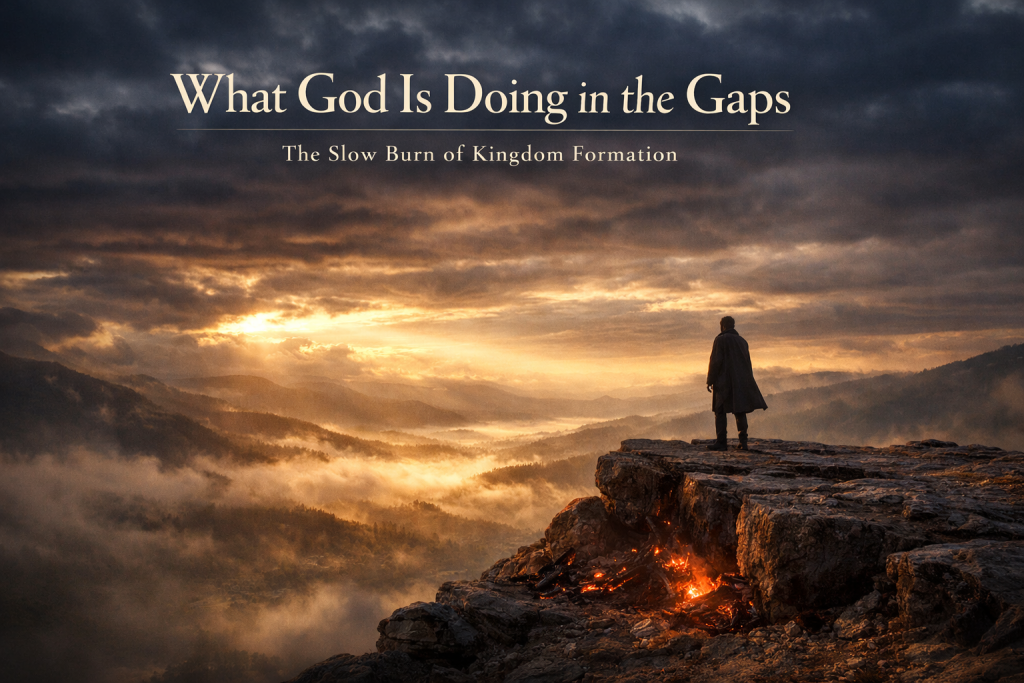
Wide-angle cinematic dawn landscape of a solitary figure standing on a rugged cliff overlooking a mist-covered valley, golden sunlight breaking through dark clouds. Subtle glowing embers burn near the cliff edge. In the sky, elegant serif title text reads “What God Is Doing in the Gaps” with the subtitle “The Slow Burn of Kingdom Formation.”
Apostolic Journey & Desolate Places

What God Is Doing in Your Waiting Season

The Slow Burn of Kingdom Formation I. Introduction: The Fear of the Gap The invitations slow. The momentum stalls. The door that seemed certain closes without explanation. Your influence feels smaller.Your voice feels quieter.Your progress feels delayed. And the whisper rises: Did I miss God? Leaders are addicted to movement. We measure fruit by expansion.We measure obedience by visibility.We measure calling by acceleration. But here is the truth most leaders resist: The gap is not where God pauses your calling — it is where He purifies it. Delay is not divine hesitation.It is divine refinement. What feels like loss is often reduction for strength.What feels like silence is often surgical precision. If you are in a gap, you are not abandoned. You are being rebuilt. Key Takeaways Hiddenness is not punishment — it is preparation. God deepens before He displays. Reduction precedes authority. Waiting exposes false dependencies. Fast growth produces fragile leaders. Slow burn produces immovable ones. If God has slowed you down, He is increasing your weight. II. The Lie of Immediate Momentum The modern church worships speed. We assume that if God is in it, it will expand quickly. That is not Kingdom thinking. Jesus was hidden for 30 years. David was hunted before he was crowned. Joseph was imprisoned before he governed nations. God builds leaders the way He builds foundations — underground first. Silence does not mean stagnation. Silence means excavation. Waiting is not weakness. Waiting is warfare against impatience. If you cannot endure obscurity, you cannot steward influence. III. The Pattern You Cannot Escape Every Kingdom assignment follows a pattern: Promise Hiddenness Testing Reduction Release You do not skip hiddenness. You do not bypass testing. You do not negotiate reduction. The leader who tries to outrun this process collapses under the weight of what they prayed for. Hiddenness is not interruption. It is initiation. IV. Elijah: Detox Before Fire Elijah confronted kings. Then God sent him to a brook. Alone.Dependent.Reduced. The brook dried up. That was not failure. That was detox. God was stripping Elijah of visible strength so that heaven could trust him with visible power. Then came Carmel. Fire from heaven did not come from charisma. It came from hidden dependence. And when Elijah collapsed in the cave? God did not scold him. God recalibrated him. If you are in a cave, God is not punishing you. He is purifying your identity. V. Jeremiah: Obedience Without Applause Jeremiah preached. They ignored him. He warned. They resisted. He wept. Nothing changed. Would you stay if revival never came? Would you obey if fruit never surfaced? Jeremiah’s success was not measured in crowds. It was measured in faithfulness. The gap does not guarantee applause. It guarantees exposure of your motives. VI. Discern the Gap Not all slow seasons are equal. The Consequence Gap God is correcting you.Conviction is sharp.Exposure is mercy. The Formation Gap God is strengthening you.Intimacy increases.Clarity deepens. The Transition Gap God is repositioning you.Old grace lifts.New direction is forming. Discernment matters. But in all three, one thing is certain: God is not inactive. VII. What God Is Actually Doing He is purifying your motives. He is breaking your addiction to validation. He is strengthening internal structure. He is removing the need to be seen. He is increasing your spiritual weight. Authority in the Kingdom is not granted by position. It is forged in surrender. The gap reveals what you were leaning on. And God will remove whatever competes with Him. VIII. The Slow Burn vs. The Flash Fire Flash fire: Rapid growth Shallow roots Loud influence Fragile leaders Slow burn: Deep roots Quiet strength Durable authority Leaders who cannot be shaken The world celebrates flash. Heaven builds slow burn. If God has slowed you down, He is protecting you from premature exposure. IX. How to Lead in the Gap Do not manufacture momentum. Do not scramble for relevance. Do not chase platforms. Abide. Listen. Obey the small things. Write down what God says. Refuse to move until He moves you. Isolation will distort you — stay connected to trusted voices. And above all, surrender fully. Half-surrender prolongs formation. Full surrender stabilizes it. Leadership Reflection Ask the Lord: What ambition are You removing? What dependency are You exposing? What identity are You dismantling? What strength are You building? Sit until the answer unsettles you. That is where formation begins. X. The Promise of the Slow Burn You are not behind. You are under construction. God is not withholding promotion. He is building capacity. He is not silencing you. He is sharpening you. He is not shrinking your influence. He is strengthening your core. The gap is not empty. It is holy ground. Hidden seasons produce leaders who cannot be manipulated, intimidated, or destroyed. The fire that lasts is rarely lit quickly. But when it burns, it does not go out. FAQs How long will this gap last? As long as it takes for the internal structure to match the external assignment. Can I accelerate the process? Only through surrender. Resistance prolongs it. Obedience stabilizes it. How do I know if this is formation and not failure? Failure drives you from God. Formation drives you into Him. Should I make major moves during this season? Not unless the Lord speaks clearly. Gaps are for rooting, not scrambling. Why does this feel like loss? Because something is dying. And what dies in you makes room for what must live through you. What is the greatest danger in the gap? Premature movement. Grasping for visibility. Forcing what God is still forming.

Scroll to Top